I Bought My First Car From My Wife. What Can It Teach Children About Money in Islam?
A father's story of buying his first car from his wife, and how a Money Squad book helps parents teach children about money in Islam and clear agreements.
When our daughter Aisha was born, her mother walked away from a job she adored. She had a stable career in a bank. She gave it up because she believed our daughter deserved her presence more than anything else. I still think it is the bravest decision anyone in our house has made.
One thing still worried her. It was her car financing.
The car I bought from my wife
I did not have a car of my own then. We shared hers. She had opinions about my speed. In my defence, I am not a reckless driver. I am just an efficient one. In my early learning days I also gave her car a scratch, which did not help my case.
So I made her an offer that suited us both. I would buy the car for the amount still owed on the financing. She would be free of the debt, and I would be free of her comments on my driving. The price was below what the market would have offered. How could I pass up a deal like that?
I bought the car. She settled the financing at once and left her job straight away. I owned my first car. She owned her time with our daughter.
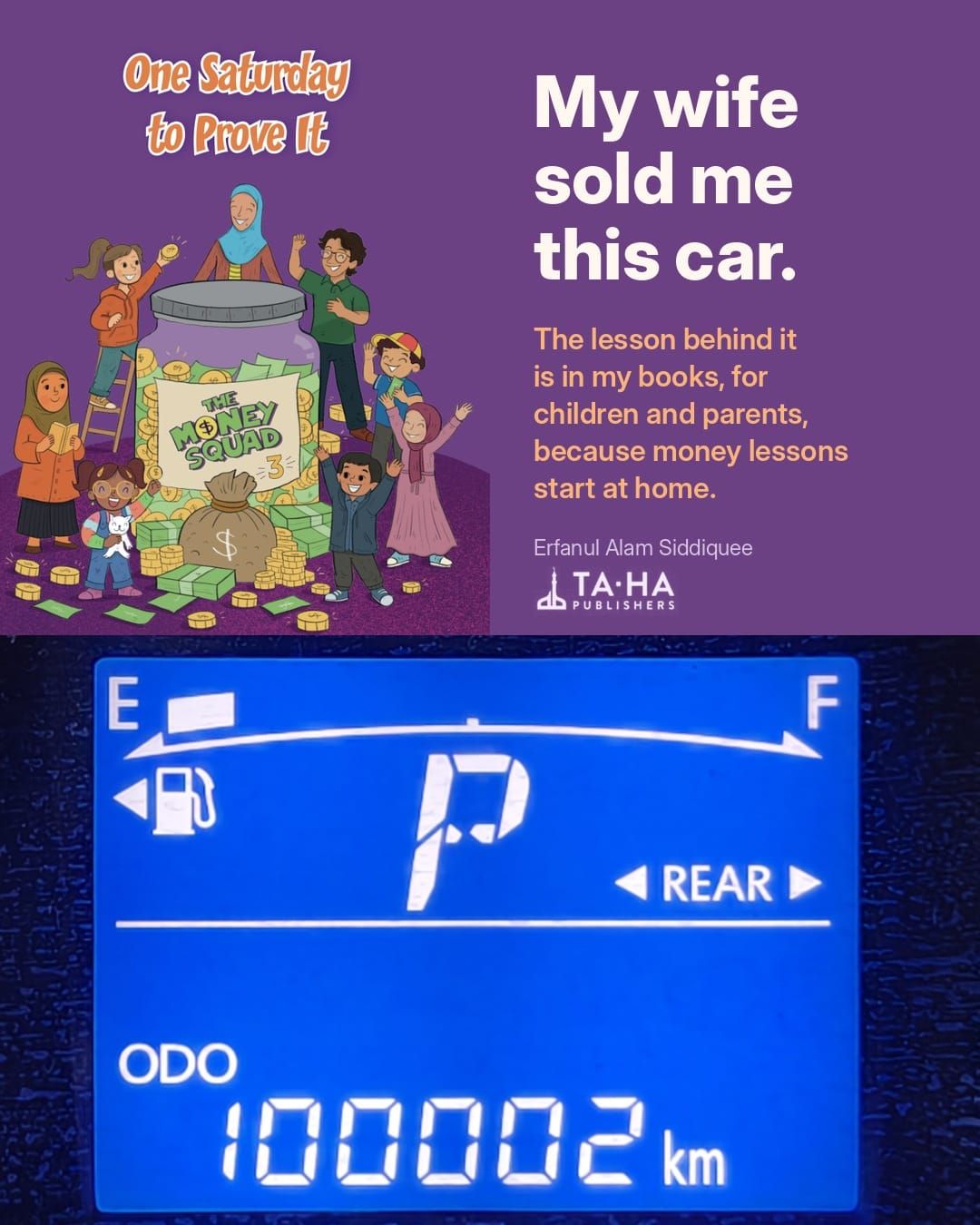
That car has now passed 100,000 km. When I saw the number, it reminded me of why I wrote my books.
Nothing was left vague
Between the two of us the terms were simple. We both knew the car, the scratch included, and we both knew the price. Nothing was left vague for either of us to fill in later.
For me, Islamic finance begins at home. Children watch how their parents agree a price, ask for a favour or make a promise. They learn from those moments before anyone gives them a lesson about money. In my work with adults, I see many who struggle with Islamic finance in their jobs and in their own lives. I wrote about this when the books came out. I think many of those struggles began with what nobody taught them when they were young.
What gharar or ambiguity means, in simple words
Islam has a word for what we managed to avoid. It is gharar, which means excessive uncertainty or ambiguity in an agreement. In a sale, it usually means that one side cannot be sure of the object, the price or the outcome. Abu Huraira reported that the Prophet, peace be upon him, forbade transactions that involve this kind of uncertainty. The hadith is in Sahih Muslim.
The word sounds technical. Children do not need the technical version first. They need to see what it looks like when it happens to someone they care about. So I gave it to Huda in the book.
What happens to Huda in One Saturday to Prove It
Huda is a young artist in the book. Aunty Sara asks her to paint a picture for the wall behind the till. They sit over ginger tea and agree on a job for huda. They shake hands. Both of them are delighted, and both of them are sure they understand each other.
But when Aunty Sara peels back the paper, there is a silence.
What each of them had pictured, why it hurt them both, and how Huda's Ammi helps her find a way back to Aunty Sara, I will leave for the book.
Why clear words matter more with people we love
One of the questions at the end of that chapter asks children something I keep coming back to. Huda realises that the more you care about someone, the more important it is to be clear with them, because you have more to lose. The book then asks the reader whether they agree, and why people might be less clear with the people closest to them.
That is why Huda's painting and my wife's car sit so close together for me. My wife and I trusted each other too. The difference was that we both knew the car, the scratch and the price.
How to teach children about money in Islam at home
You do not need a finance degree for this lesson. Every chapter of The Money Squad ends with three short sections, Think About It, Try It Yourself and Talk About It, so a parent and child can carry the story into real life.
The same habit works for small things at home. If you pay your child for a chore, agree together what finished means, how much they will get and when. It takes a minute. For a child, it may be the first agreement they ever make.
This is what financial literacy for Muslim children can look like. It is not only saving and spending. I believe it is also learning that the way we agree with each other is part of our deen.
The three Money Squad books
The Money Squad is a series of three illustrated chapter books, published by Ta-Ha Publishers. Each book steps up in age and in the ideas it carries.
Aisha and the Dollar That Changed Everything is for ages 8 and above. It covers halal earning, patient saving (sabr) and barakah.
Adam and the Price of a Promise is for ages 10 and above. It covers zakat, honest loans, inflation, waqf and Takāful.
One Saturday to Prove It is for ages 11 and above. It covers riba, shared investment and gharar, and Huda's painting is in its third chapter.
I wrote the three books so that children meet these ideas in moments like Huda's, with family and friends, long before they sign anything.
Back to the car
That car has now passed 100,000 km, on terms we both understood. When your children watch you agree something with a person you love, what are they learning about money?
How to get the books
If this story resonates with you, if you want to raise financially resilient children, or if you know someone who might benefit, you are welcome to order the books. Readers outside Malaysia can order each title from Ta-Ha Publishers. Readers in Malaysia can use this pre-order form.
And all of it is for Allah, in hopes of His pleasure.
Common questions
Are these Islamic finance books for kids only for Muslim families?
The stories are set in a Muslim community and use Islamic terms. The values in them, such as keeping a promise, being clear and sharing what we have, make sense in any home. One of the main characters, Sophie, comes from a different faith.
Where can I buy the Money Squad books?
Outside Malaysia, the books are sold by Ta-Ha Publishers. In Malaysia, fill in this pre-order form.
With best wishes,
Erfanul Alam Siddiquee

On FinFormed, I share what I learn with you, from Islamic finance to insurance, climate risk and the rules behind your money. All in plain words.
Get each letter by email
Free. Every new letter arrives in your inbox; unsubscribe from any email.
Or keep FinFormed going:
Replies